Reading your slab: 7 foundation warning signs on WilCo clay
On Central Texas clay, some cracking is normal and some is the start of a real problem. Here’s how to tell the difference before you spend a dollar.
One or two hairline cracks in a Texas house is normal. A pattern of the signs below — especially several at once, getting worse across a season — is what points to active foundation movement worth a professional look. Watch for the pattern, not the single crack.
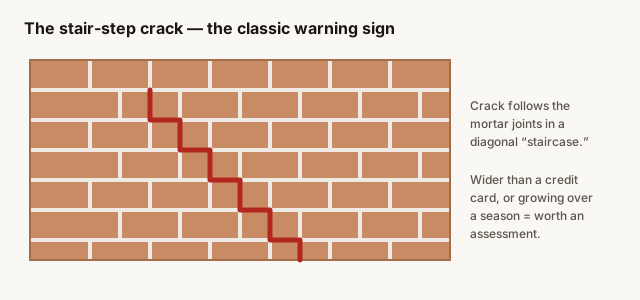
1. Stair-step cracks in exterior brick
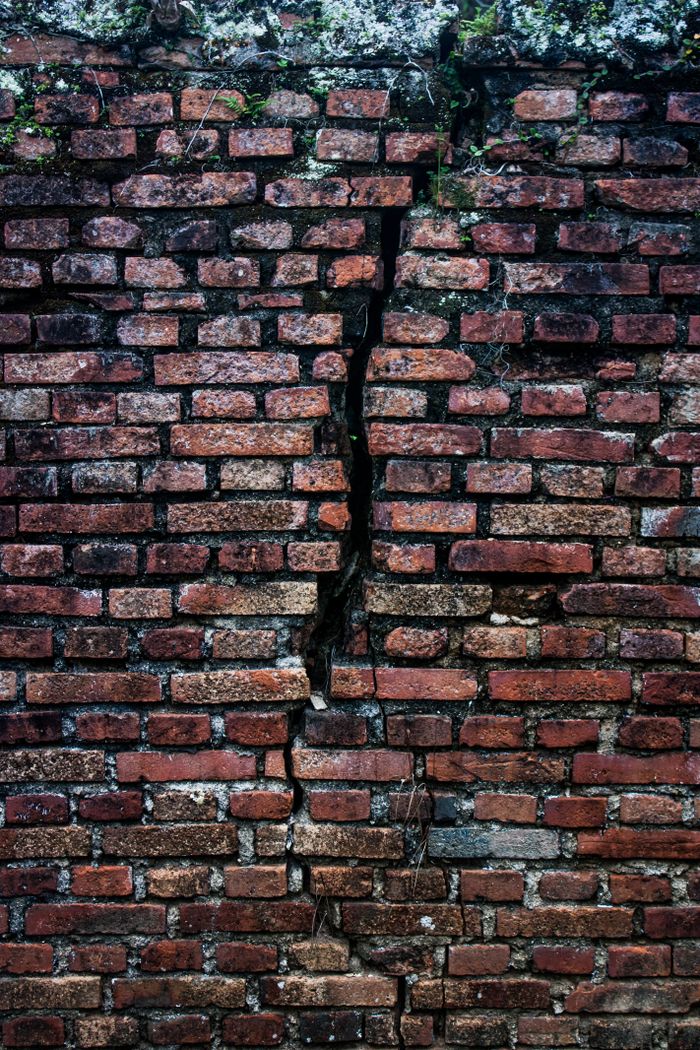
Cracks that climb the mortar joints in a diagonal staircase pattern — usually starting near a corner, a window, or a garage opening — are the classic sign of differential movement. A crack you can slip a credit card into, or one that’s clearly grown since last year, is worth an assessment.
2. Diagonal cracks from the corners of doors and windows
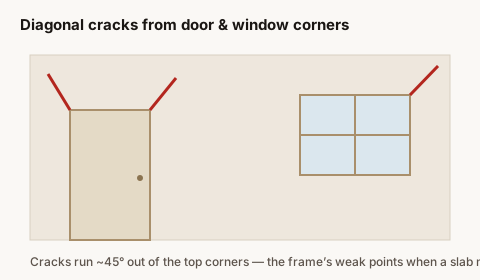
Inside, look for cracks running at roughly 45 degrees out of the top corners of door and window frames. Those corners are stress points; when the slab moves, that’s where the drywall tears first. Straight vertical hairlines over a door are usually just drywall shrinkage — the diagonal ones are the ones to note.
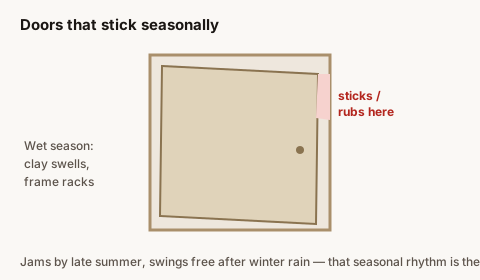
3. Doors and windows that stick seasonally
This one is very Central Texas: interior doors that jam by late summer and swing free again after the winter rains. That seasonal rhythm is the clay swelling and shrinking, flexing the door frame out of square. If a door has stuck and stayed stuck, or several doors go at once, the movement may be more than seasonal.
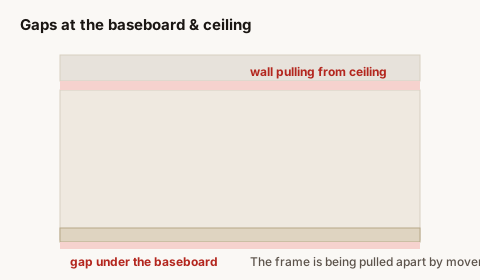
4. Gaps at the baseboards or where walls meet the ceiling
A gap opening up between the baseboard and the floor, or a separation where the wall meets the ceiling, means the frame is being pulled apart by movement below. Caulk that keeps cracking back open in the same spot is telling you the same thing.
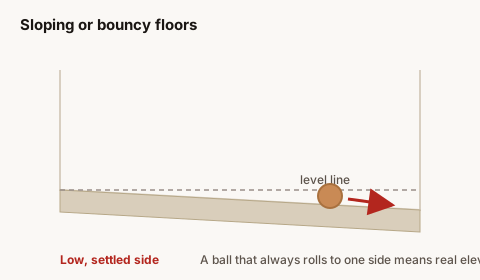
5. Sloping, sagging, or bouncy floors
Set a ball or a marble on the floor — if it consistently rolls to one side of a room, you may have real elevation change. Bouncy or spongy floors are more common over pier-and-beam (a sign of failing supports or rotted wood below), while a hard slope on a slab points to settling.
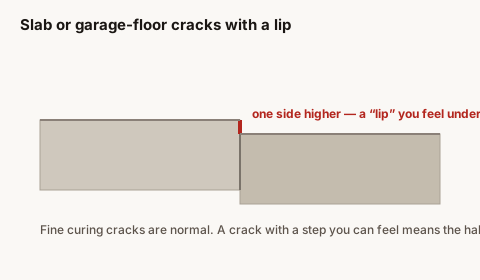
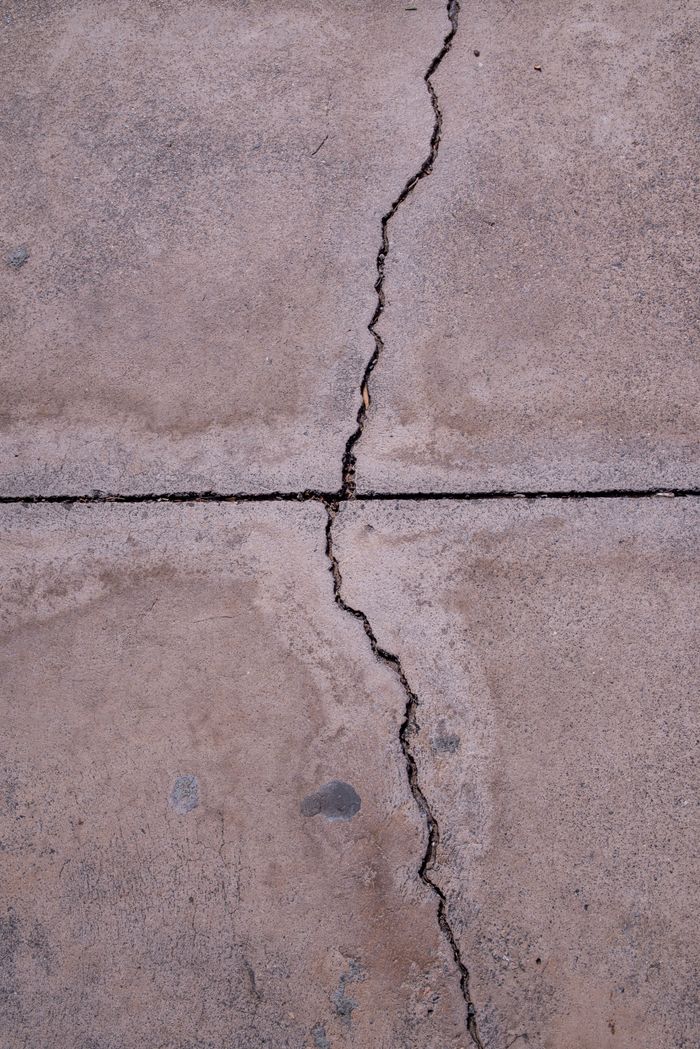
6. Cracks in the slab itself or the garage floor
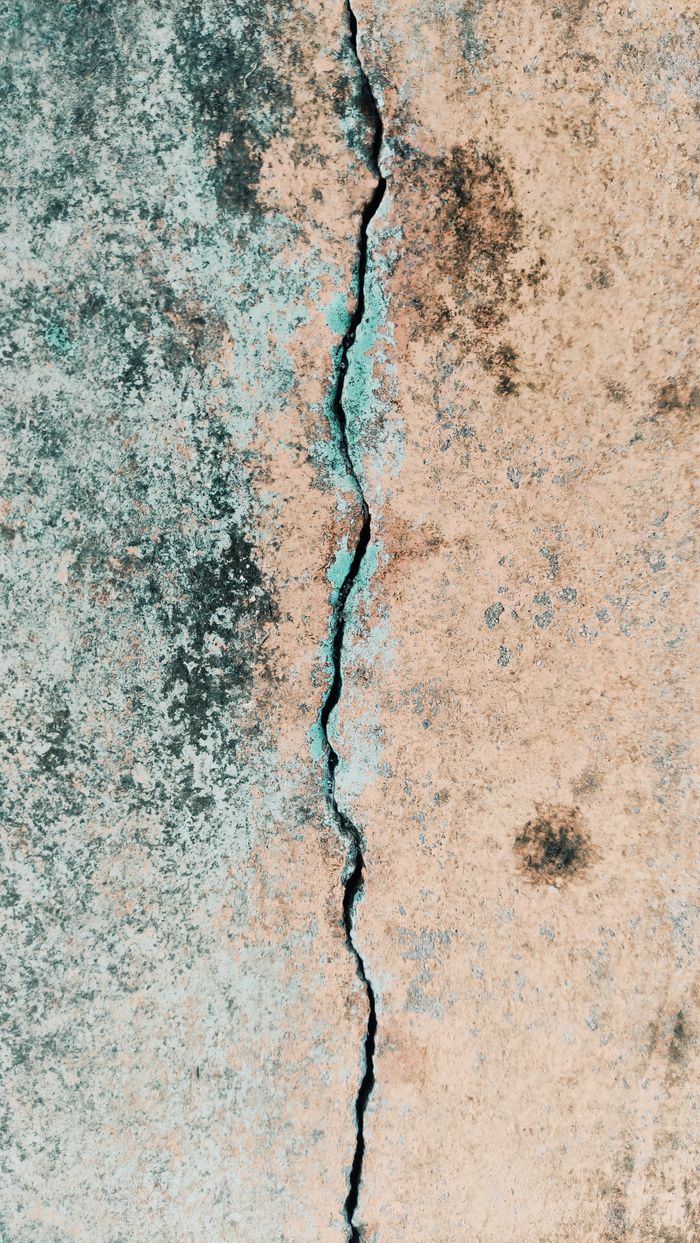
The garage is often the easiest place to read a slab because the concrete is exposed. Fine curing cracks are normal; a crack with a vertical lip you can feel with your foot — one side higher than the other — means the two halves have moved relative to each other. That’s worth attention.
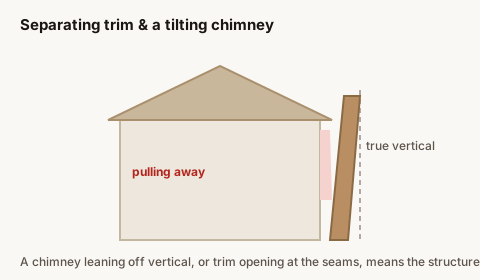
7. Separating trim, cabinets pulling from the wall, or a chimney tilting
Crown molding opening at the seams, kitchen cabinets drifting away from the wall, or an exterior chimney leaning slightly away from the house are all “the structure is racking” signs. A tilting chimney in particular is worth a prompt look.
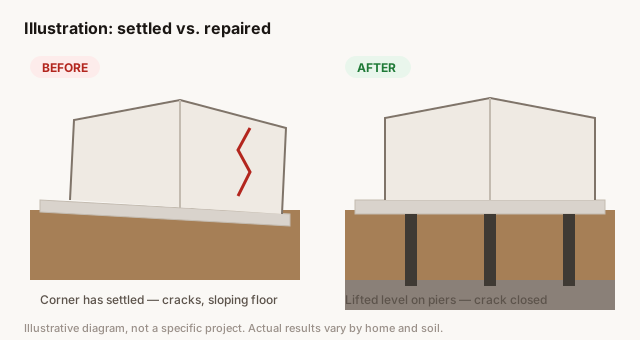
Seeing signs isn’t the same as needing piers
Plenty of these signs come and go with the seasons on our clay, and sometimes the fix is drainage and consistent watering, not underpinning. The neutral way to know is an independent structural engineer — they don’t sell repairs, so their assessment of what (if anything) you need is unbiased, and it becomes the scope every contractor quotes against. Be especially wary of anyone who inspects for free and then pressures you to “sign today” — a real foundation problem isn’t getting worse in the 48 hours it takes to get a second opinion.
What to do if you’re seeing the pattern
Note which signs you have and roughly when they started (a photo timeline helps), and mention whether you’re on a slab or pier-and-beam when you request quotes — that routes you to the right kind of crew. You can also check the honest cost ranges first so a quote doesn’t catch you off guard, and see why east-county clay moves more if you’re in Hutto, Taylor, or Pflugerville.
Get it looked at by a local crew
Tell us which signs you’re seeing and your city. We’ll match you with up to three independent contractors who work your area — free, no obligation.
More foundation guides: Why Hutto & Taylor homes crack more · Watering your foundation through a Texas drought