Watering your foundation through a Central Texas drought
On Williamson County clay, the cheapest foundation “repair” is often a $30 soaker hose used the right way — keeping the soil from drying out and dropping in the first place.
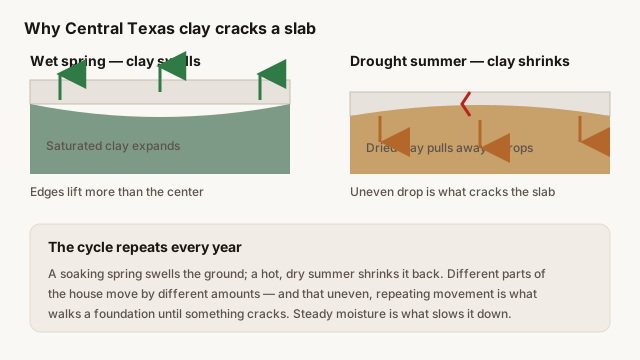
Why this works: Blackland clay cracks foundations by shrinking away from the slab during drought and swelling back after rain. If you keep the moisture around your foundation steady through a dry summer, the clay moves less — and less movement means fewer cracks. The goal isn’t to soak the ground; it’s to keep it from swinging between bone-dry and saturated.
When to start
Start before the ground is already cracked and pulling away — typically late spring into early summer, as Central Texas dries out and before the worst of the July–September heat. Once you can see wide gaps in the soil next to the slab, the clay has already shrunk; you’re now trying to recover rather than maintain, and you have to bring moisture back slowly to avoid heaving one section up.
The simple routine
Run a soaker hose about 12 to 18 inches out from the foundation, all the way around the house (or at least the sunny south and west sides that dry out fastest). You want the hose far enough out that you’re watering the soil that supports the slab edge, not flooding right against the concrete.
- Frequency: short, consistent sessions beat occasional soakings. In a hot, dry stretch, many WilCo homeowners run soaker hoses two to three times a week for 30–45 minutes. Consistency matters more than volume.
- Goal: damp, not muddy. If water is pooling or running off toward the house, you’re overdoing it — back off.
- Automate it: a $15 hose timer takes the guesswork out and keeps the moisture even, which is the entire point.
- Even is everything: water all sides similarly. Watering only one side can make the movement worse by lifting that edge while the other stays dry.
The mistakes that cause more harm than good
Flooding a foundation that’s already dried out. Dumping a lot of water fast onto shrunken clay can heave one area up sharply — you want slow, even re-wetting over days, not a fire-hose. Watering only where you see a crack. That creates the uneven moisture that cracks foundations in the first place. Letting water pool against the slab. Too much water softens the soil and can drive movement (and invite other problems); the aim is steady dampness a foot or so out, not a moat.
Drainage is the other half
Watering keeps the clay from drying out; good drainage keeps it from getting waterlogged after storms. Make sure your yard slopes away from the house, downspouts carry roof water several feet out (not right next to the slab), and there’s no low spot pooling against the foundation. Steady moisture plus good drainage is the whole game — it’s why honest local crews ask about both before they ever talk piers.
When watering isn’t enough
A watering routine helps prevent movement and can slow a mild, seasonal problem — it won’t lift a foundation that has already settled significantly. If you’re seeing a real pattern of damage (see the 7 warning signs), it’s worth an assessment from an independent structural engineer, who can tell you whether you’re maintaining or need actual repair. And if you’re in Hutto, Taylor, or Pflugerville, here’s why east-county clay is so active in the first place.
Not sure if it’s watering or repair?
Tell us what you’re seeing and your city. We’ll match you with local crews who’ll tell you honestly whether it’s a drainage-and-watering fix or a real repair — free, no obligation.
More foundation guides: Why Hutto & Taylor homes crack more · 7 foundation warning signs on WilCo clay